Somatic Integration
Somatic disciplines address the experiential education of the body and the voice as they are lived subjectively, in the first person, by individuals, groups, and communities. They engage participants in an active exploration of their own lived corporeality—the body as perceived and felt in the here and now—in order to facilitate new forms of awareness of and relationship with one's own body, as well as the emergence of new possibilities of movement, vocality, thought, and expression. Somatic disciplines include structured approaches such as Body-Mind Centering, the Feldenkrais Method, and the Laban-Bartenieff approach, alongside traditions of Eastern origin and other approaches tied to forms of transmission that have felt no need to organize themselves into "schools."
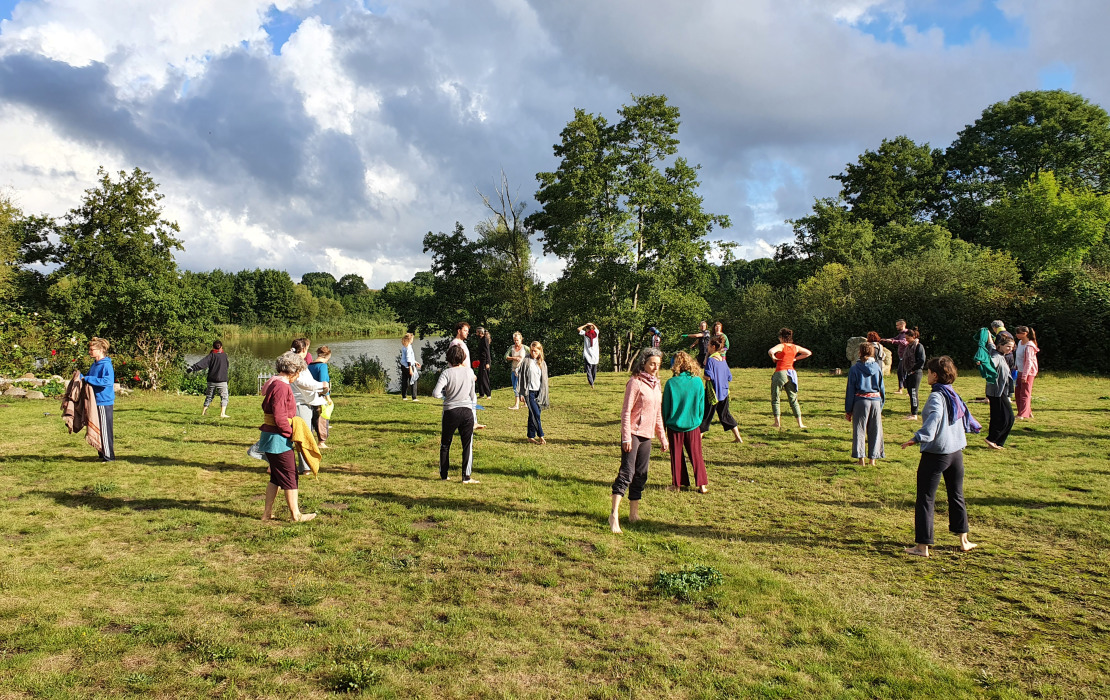
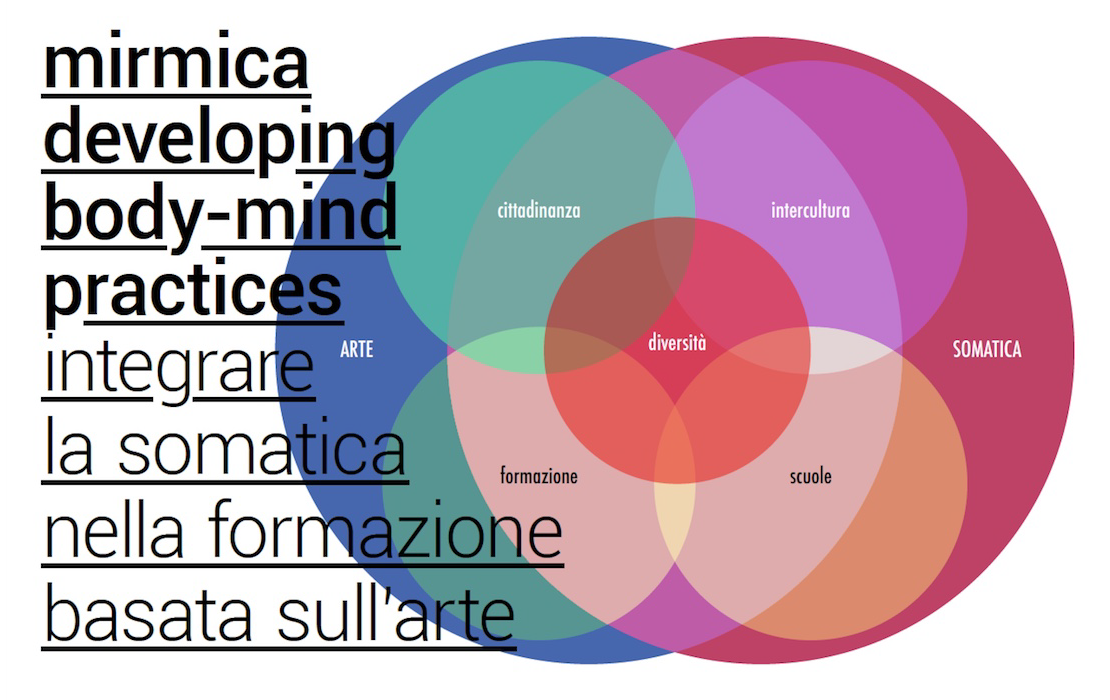
One of Mirmica's lines of action is to work on integrating somatic approaches and knowledge into practices of artistic-scientific research and into those of creation, training, and care, in order to facilitate a fertile and inclusive reframing of the mind-body split that still characterizes the cultural heritage we live within. The approaches may vary, may involve groups or single individuals, and may offer practices of movement, experiential anatomy, and touch, complemented by anatomical and theoretical study, structured conversations, and aesthetic and artistic explorations with various materials, carried out indoors or in outdoor, natural environments. In each case, it is not a matter of imagining a transfer of ready-made techniques or solutions, but of questioning the relevance of the lived body in different settings, and of defining, through dialogue, appropriate practices and modes of evaluation.
Somatic Integration has developed within Mirmica through international activities, together with training and research centres, both inside and outside two dedicated European projects, and in various local projects involving individuals and groups of citizens—including collaborations with organizations devoted to the promotion of mental health and the inclusion of people with psycho-physical disabilities, with communities dedicated to advancing the rights of LGBTQ+ people and/or migrants, and with foundations, cultural and environmental bodies, newspapers, and training institutions for specialists in the caring professions. To recognize one's own body and that of the other in its uniqueness and fragility, and in each person's capacity to engage, rooting our gaze in the present and in its possibilities for development and transformation.